I’ve seen too many beautiful kitchens derailed by floor choices that looked great for six months, then showed every fingerprint and water spot like a crime scene.
Here’s the thing: your kitchen floor needs to work as hard as you do, balancing durability with style in a space that’s equal parts cooking station and family gathering spot. The right porcelain tile does both, but knowing which one matters more than you’d think, and I’m about to show you exactly why.
Daltile Florentine Glazed Porcelain Floor Tile Carrara
Looking for kitchen floor tiles that deliver that coveted marble aesthetic without the maintenance headache? I’d recommend the Daltile Florentine Glazed Porcelain Floor Tile in Carrara. These 12″ x 12″ tiles emulate marble beautifully through Reveal Imaging technology, offering crisp whites, neutral tans, and fresh grays that work flawlessly in modern kitchens.
The glazed porcelain construction proves incredibly durable for high-traffic areas while staying low-maintenance. You’ll appreciate the water resistance and easy upkeep. Each carton contains 13 tiles covering 12.22 square feet, and the manufacturer recommends a 10% overage for design cuts. Installation’s straightforward with a glue-down method, and square edges ensure clean lines throughout your space.
Best For: Homeowners seeking a stylish, low-maintenance marble aesthetic for kitchen and high-traffic areas without the upkeep requirements of natural stone.
Pros:
- Beautifully emulates marble with Reveal Imaging technology while offering superior durability and water resistance for easy maintenance
- Glazed porcelain construction is incredibly durable for high-traffic areas and requires minimal upkeep compared to natural marble
- Versatile Carrara color palette with crisp whites, neutral tans, and fresh grays complements modern kitchen designs seamlessly
Cons:
- Glazed porcelain surface may become slippery when wet, which could be a safety concern in kitchens prone to moisture
- Limited to high-gloss finish for walls; matte floor options require coordinating with separate products rather than having multiple finishes in one tile
- Requires 10% overage for design cuts and patterns, which increases material costs for the overall project
Tenedos 12×12 Porcelain Floor Wall Tile White
If you want a versatile, low-maintenance tile that works equally well on kitchen floors or walls, this Tenedos option deserves your attention. These 12×12 porcelain squares feature a semi-matte glazed finish in crisp white, delivering that clean, timeless aesthetic most kitchens benefit from.
The material itself resists water, heat, moisture, and scratches, making it genuinely practical for high-traffic areas. Installation’s straightforward with a glue-down method, and you’ll get 10.7 square feet per box. I appreciate that you can use these tiles beyond the kitchen too, from bathroom showers to hallway accents. The semi-matte finish strikes a nice balance, avoiding that slippery gloss while staying easy to clean.
Best For: Homeowners and commercial property managers seeking a durable, versatile tile solution that works for both floors and walls in kitchens, bathrooms, and high-traffic areas without requiring extensive maintenance.
Pros:
- Water, heat, moisture, and scratch-resistant material makes it ideal for demanding environments like kitchens, bathrooms, and commercial spaces
- Semi-matte glazed finish provides an attractive, timeless aesthetic while remaining practical and easy to clean
- Straightforward glue-down installation method and efficient coverage of 10.7 sq ft per box simplify the installation process
Cons:
- Limited to solid white color and classic pattern, offering no design variety for those seeking more decorative or colorful tile options
- Semi-matte finish may still be slippery in wet areas like showers, requiring additional safety considerations
- Exact nominal sizing (11-7/8 in rather than full 12 in) requires precise measurements and planning to avoid installation gaps or alignment issues
Manises Cuero 13-1/8″ x 13-1/8″ Porcelain Floor and Wall Tile
Want a kitchen floor that captures rustic charm without compromising on durability? The Manises Cuero from Merola Tile delivers exactly that. These 13-1/8″ square porcelain tiles feature a textured matte finish inspired by authentic rustic aesthetics, and they’re built tough for kitchen demands.
With a PEI Rating III, they handle normal foot traffic beautifully in kitchens, bathrooms, and hallways. I appreciate that each case includes six different print variations, giving your floor a naturally organic, one-of-a-kind appearance rather than repetitive uniformity. The impervious water absorption and frost resistance mean you’re getting serious performance regardless of moisture exposure.
Best For: Homeowners seeking durable, stylish porcelain tiles with rustic charm for medium-traffic residential areas like kitchens, bathrooms, and hallways who value a naturally varied appearance without repetitive patterns.
Pros:
- Impervious water absorption and frost resistance provide excellent durability in wet environments like bathrooms and kitchens
- Six different print variations per case create a unique, organic look that avoids repetitive uniformity
- PEI Rating III is suitable for normal residential foot traffic in kitchens, hallways, and bathrooms
Cons:
- PEI Rating III limits use to medium-duty residential spaces; not recommended for high-traffic commercial areas or homes with heavy footwear traffic
- At 0.32 inches thick with a textured matte finish, the surface may require more careful cleaning to avoid dirt accumulation in texture grooves
- Glue-down installation method is required
MSI Zenzibar Encaustic Porcelain Wall Tile 8×8
The MSI Zenzibar brings authentic encaustic style to your kitchen without the maintenance headaches. I appreciate how these 8×8 matte porcelain tiles deliver that hand-painted aesthetic you’d find in high-end spaces, yet they’re waterproof and stain-resistant, making cleanup genuinely effortless.
At 0.55 inches thick with a glazed surface, they’re durable enough for floors, backsplashes, and shower walls alike. Each case covers 5.16 square feet with 12 pieces, so planning your project becomes straightforward. The matte finish and grayish-blue tone work beautifully in contemporary kitchens, offering versatility across residential and commercial settings while demanding minimal upkeep.
Best For: Homeowners and commercial property managers seeking a low-maintenance, authentic encaustic tile aesthetic that combines durability with elegant design for kitchens, bathrooms, and mixed indoor/outdoor spaces.
Pros:
- Waterproof and stain-resistant glazed porcelain surface requires minimal maintenance while delivering high-end hand-painted aesthetics
- Versatile 8×8 matte tiles work across multiple applications including floors, backsplashes, shower walls, and fireplaces in both residential and commercial settings
- Durable 0.55-inch thick construction with scratch resistance ensures long-lasting performance and easy project planning at 5.16 sq ft per case
Cons:
- Limited color options available (matte grayish-blue tone) may restrict design flexibility for varied aesthetic preferences
- Thinset mortar installation required, which demands professional skill or experience to ensure proper application and grout line consistency
- Individual tile weight of 2.9 lb and case weight of 34.8 lb make handling and installation labor-intensive for larger projects
MSI Azila Encaustic Matte Porcelain Tile 8×8
Looking for kitchen floor tiles that blend artistic charm with practical durability? I’d consider the MSI Azila, an encaustic porcelain option featuring a snow-white background with black and gray floral prints and subtle geometric influences.
Each 8×8 inch tile measures 0.55 inches thick, offering solid construction. What I appreciate most is its matte finish, which resists reflections and fingerprints in busy kitchens. The waterproof porcelain handles moisture beautifully, making it ideal for kitchens and bathrooms alike.
Installation’s straightforward with thinset mortar, and maintenance requires nothing special. You’ll get about 5.16 square feet per case with 12 tiles included, and that handcrafted aesthetic adds character without demanding seamless alignment.
Best For: Homeowners seeking artistic, durable kitchen and bathroom flooring that combines encaustic design appeal with low-maintenance, waterproof porcelain performance.
Pros:
- Waterproof porcelain construction ideal for moisture-exposed areas like kitchens, bathrooms, and showers
- Matte finish resists fingerprints and reflections, maintaining a clean appearance in high-traffic spaces
- Low maintenance with easy cleaning and no special ongoing care required
Cons:
- Individual handcrafted aesthetic means tiles don’t align seamlessly, which may not suit those preferring uniform, grid-like patterns
- Limited coverage per case (5.16 square feet with 12 tiles) may require ordering multiple cases for larger projects
- Relatively thick at 0.55 inches, which may require additional preparation during installation in existing spaces
Factors to Consider When Choosing Porcelain Tiles for Kitchen Floors
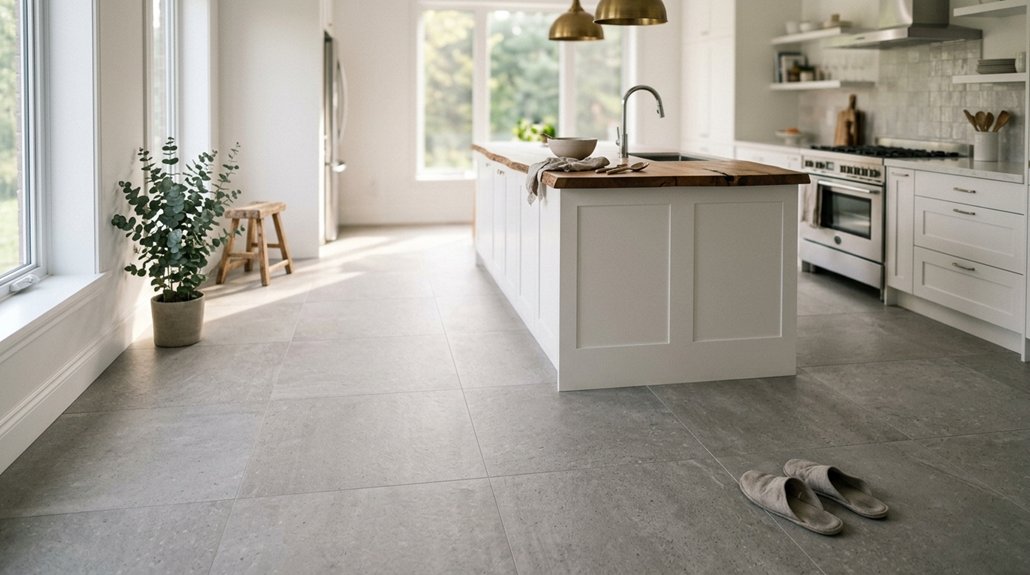
Before you commit to any porcelain tile for your kitchen, I’d recommend evaluating several key factors that’ll directly impact how well your floor holds up and looks over time. You’ll want to consider durability for high traffic areas, water resistance requirements for those inevitable spills, finish and gloss options that match your style, size and layout planning to minimize cuts and waste, and installation method considerations that affect both cost and longevity. Getting these fundamentals right at the outset saves you from costly regrets down the road.
Durability For High Traffic
Kitchen floors take a beating, and your porcelain tiles need to handle it without cracking, staining, or wearing thin. I’d prioritize a PEI rating of III or higher, which signals medium to heavy residential durability perfect for busy kitchens with normal foot traffic.
Look for impervious tiles with less than 0.5% water absorption. This keeps spills from seeping in and causing stains or warping. A glazed finish with texture or matte qualities adds slip resistance and abrasion resistance, extending your floor’s lifespan significantly.
Thickness matters too. Aim for tiles between 0.32 to 0.55 inches paired with proper thinset installation. This combination resists cracking under impact and heavy loads. One note: consistent finishes outperform random print variations in high-traffic zones, where uneven wear becomes noticeable over time.
Water Resistance Requirements
Now that you’ve got durability locked down, water resistance is what actually keeps your kitchen floor standing up to the daily reality of spills, splashes, and moisture creep. I’d recommend hunting for tiles labeled as impervious with a water absorption rate under 0.5% – that’s your sweet spot for maximum moisture protection.
And here’s the thing: a sturdy glaze paired with a high PEI rating shields your floor from water-related wear over time. Don’t overlook installation either. Proper thinset mortar and quality grout dramatically enhance your surface’s overall water resistance.
Even decorative or encaustic tiles work beautifully in kitchens, but verify they’re porcelain (not ceramic) and specifically rated for floor use in moist environments. That distinction matters more than you’d think.
Finish And Gloss Options
What finish you choose shapes not just how your kitchen looks, but how it functions day to day. I’d recommend considering these primary options:
Matte finishes offer non-reflective surfaces that disguise footprints and smudges beautifully, making maintenance feel less demanding. They create subtle texture and a sophisticated aesthetic.
Glazed porcelain ranges from shiny to semi-matte, influencing both slip resistance and how much light bounces around your space. Higher gloss reflects more light, potentially making your kitchen appear larger, but fingerprints show more readily.
Textured and encaustic glazes deliver decorative patterns while maintaining durability, typically with low-sheen or matte appearances that add visual interest without high maintenance.
Whatever direction you choose, consistency across your entire tile set ensures uniform appearance when pairing floors with walls or backsplashes.
Size And Layout Planning
How you arrange your tiles matters as much as which ones you pick, because the right layout transforms your kitchen floor from merely functional to visually cohesive. Standard 12×12 inch tiles work beautifully for most kitchens, covering roughly 10.7 to 12.22 square feet per carton, so you’ll know exactly how many you need. Square-edged tiles create that uniform grid effect, while beveled or pressed edges add visual interest by playing with grout line shadows.
Here’s where it gets strategic: random print variations across tiles prevent monotonous repetition, giving your floor authentic character. And spacing matters too. Tighter grout lines feel sleek and modern, while wider lines emphasize the tile grid.
Plan your layout before installation to avoid awkward partial tiles in high-visibility spots like your kitchen’s entry or main work zone.
Installation Method Considerations
Since most porcelain tiles you’ll encounter rely on glue-down (thinset) installation rather than floating or click-lock systems, understanding this method’s demands upfront saves you from costly mistakes down the road. I’d recommend prioritizing tiles with square edges over beveled ones, as they create transition patterns and ensure consistent mortar application during installation.
Substrate prep is non-negotiable. You’ll need a stable, level surface before any mortar touches down. Tile thickness typically ranges from 0.32 to 0.55 inches, so verify compatibility with your existing thresholds and transitions.
Plan for roughly 10 percent design overage to account for cuts and pattern adjustments. Getting these details right from the start means your kitchen floor stays beautiful and durable for years.
Maintenance And Upkeep Ease
Keeping your kitchen floor looking pristine matters just as much as choosing the right tile in the first place, and porcelain’s low-maintenance reputation actually holds up when you pick the right finish and understand what you’re getting into. Here’s what I’d focus on:
Matte finishes hide fingerprints and require regular cleaning to maintain their texture, while glossy options show every smudge but wipe down quickly. Low water absorption under 0.5% prevents staining and moisture damage, keeping your floor resilient through spills and daily wear.
Consider the tile’s finish carefully. Decorative porcelain with intricate patterns needs specialized cleaners or occasional sealing to preserve color contrast.
Standard glazed tiles, though, are straightforward to maintain with basic cleaning routines and standard household products.
Color Palette Selection Guide
Once you’ve settled on a finish that fits your cleaning routine, the color you choose becomes your kitchen’s visual anchor, shaping everything from how spacious the room feels to how well it complements your cabinets and countertops.
I recommend starting with neutrals like white, gray, or beige as your foundation. These work with virtually any design direction. If you want warmth, consider tans; for coolness, explore soft blues that pair beautifully with darker cabinetry.
Marble-inspired palettes with Carrara whites and gray veining create timeless, airy kitchens. When using patterned or encaustic tiles, guarantee the dominant color aligns with your existing finishes.
For cohesion, pair lighter tiles with darker grout or matching grout to enhance color and minimize visual contrast.
Cost And Coverage Comparison
How much porcelain tile you’ll actually need for your kitchen floor depends heavily on tile size and coverage rates, which vary substantially across products and directly impact your total project cost. You’ll notice significant differences across options: 12″ x 12″ tiles offer 12.22 or 10.7 sq ft per carton, while 8″ x 8″ tiles provide just 5.16 sq ft per case. This means larger tiles require fewer pieces overall, yet smaller tiles sometimes offer better layout flexibility for awkward spaces.
I’d calculate your kitchen’s square footage first, then add 10-15% for waste and cuts. Comparing cost-per-square-foot across products reveals which option stretches your budget furthest without compromising quality or requiring excessive overage.